
 Science
Developed as a medical product, not a supplement trend.
Ivy is an investigational technology in development under a rigorous regulatory path, with formulation, delivery kinetics and tolerability assessed through structured, documented study. We will publish what we can, when we can support it. Nothing sooner.
Evidence summary for clinicians
Ivy is an investigational technology under development. It is not CE-marked, not approved, and not available. Nothing on this page describes established clinical efficacy or safety in humans.
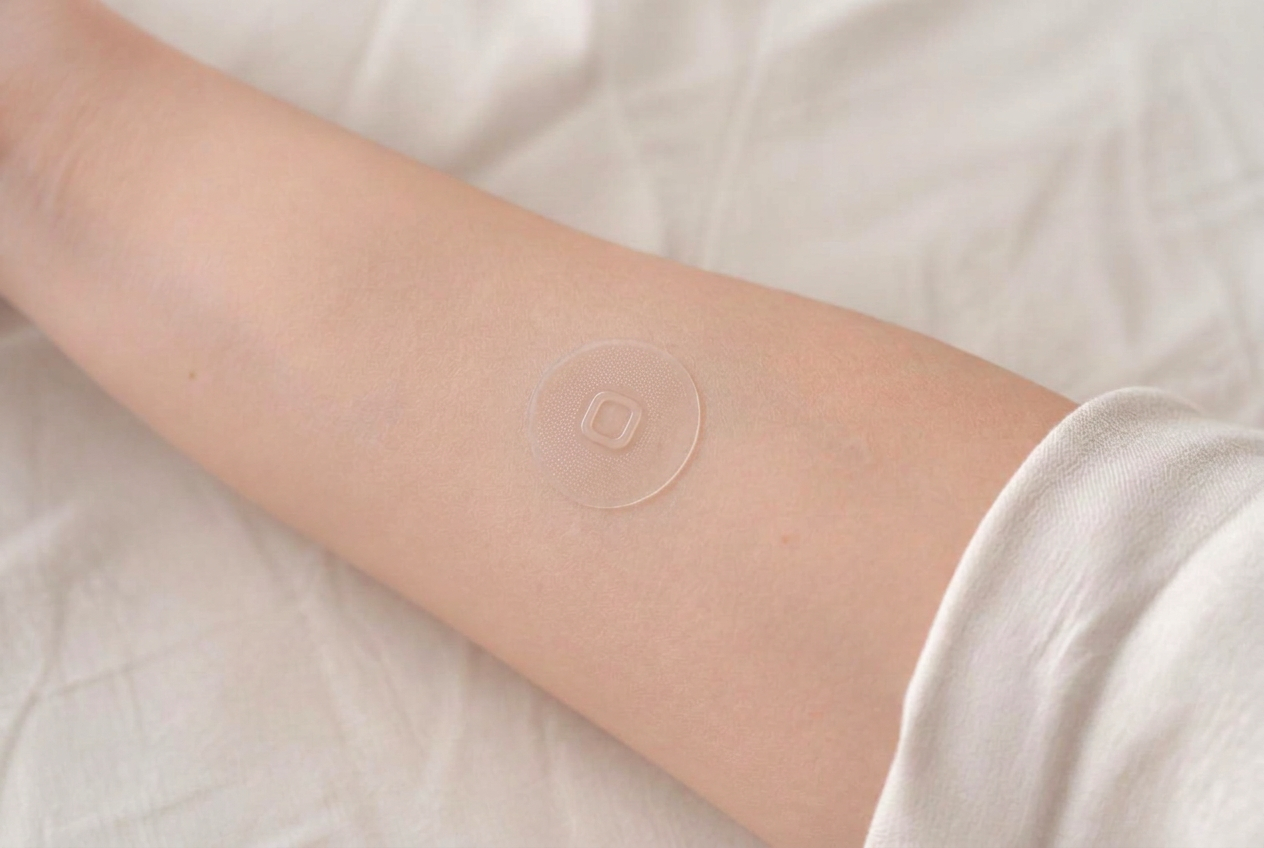
Cardinal Biohealth is developing Ivy, a controlled-release microneedle approach intended to deliver selected micronutrients systemically.
The rationale rests on well-documented limitations of oral absorption for certain vitamins, and on the clinical preference for parenteral routes when reliable systemic levels are required.
This page summarises relevant published evidence only. No performance, safety or therapeutic effect is claimed for Ivy itself.
1. Limitations of oral delivery
Vitamin B12 absorption is largely dependent on intrinsic factor. Food-cobalamin malabsorption is common, particularly with advancing age, reduced gastric acid, atrophic gastritis, or medications such as metformin. Passive diffusion accounts for only a small fraction of absorption.
Unraveling the Enigma: Food Cobalamin Malabsorption and the Persistent Shadow of Cobalamin Deficiency (Journal of Clinical Medicine, 2025)
https://www.mdpi.com/2077-0383/14/8/2550Network meta-analysis of B12 administration routes shows that while high-dose oral, sublingual and intramuscular routes can all raise serum levels, intramuscular administration ranked highest for increasing B12 concentrations in the included studies.
Efficacy of different routes of vitamin B12 supplementation for the treatment of patients with vitamin B12 deficiency: a systematic review and network meta-analysis (Irish Journal of Medical Science, 2024)
https://link.springer.com/article/10.1007/s11845-023-03602-4Broader micronutrient bioavailability is influenced by host factors (age, gut health, medications), dietary antagonists and the food matrix. Fat-soluble vitamins such as vitamin D are particularly dependent on bile acids and micelle formation.
Micronutrient bioavailability: concepts, influencing factors, and strategies for improvement (Frontiers in Nutrition, 2025)
https://www.frontiersin.org/journals/nutrition/articles/10.3389/fnut.2025.1646750/full2. Parenteral delivery as clinical reference
Intravenous administration bypasses gastrointestinal absorption and first-pass metabolism, achieving essentially complete bioavailability. Classic pharmacokinetic work on vitamin C demonstrated that oral dosing is tightly controlled, while intravenous dosing produces substantially higher plasma concentrations.
Levine et al. Vitamin C Pharmacokinetics: Implications for Oral and Intravenous Use (Annals of Internal Medicine, 2004)
https://www.acpjournals.org/doi/10.7326/0003-4819-140-7-200404060-00010Parenteral routes (intravenous or intramuscular) remain the clinical standard when rapid or guaranteed systemic repletion is required: severe deficiency, confirmed malabsorption, and certain neurological presentations.
3. Microneedle research relevant to vitamin delivery
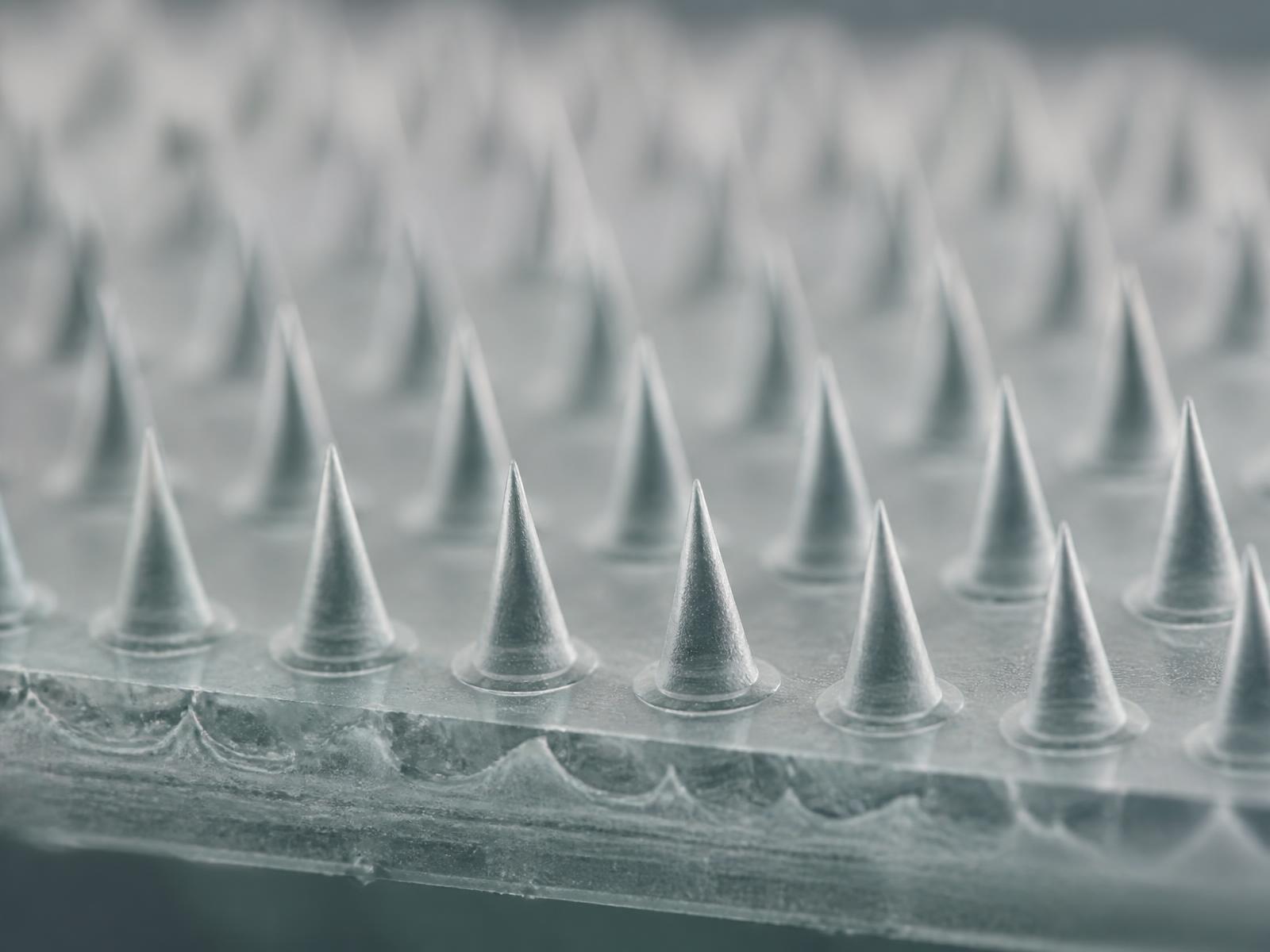
The studies below are primarily preclinical or early translational.
Dissolving microneedle arrays have been shown to penetrate the stratum corneum with high insertion efficiency and to deliver vitamin B12 transdermally.
PMVE/MA-based microneedle patches for rapid transdermal delivery of vitamin B12: fabrication and evaluation (Drug Delivery and Translational Research, 2026)
https://link.springer.com/article/10.1007/s13346-026-02055-3Additional dissolving microneedle formulations (PVP/trehalose) demonstrated measurable permeation of vitamin B12 through skin and subsequent biological activity in endothelial cell models.
Dissolving microneedles enable effective transdermal delivery of vitamin B12 and reduce endothelial inflammation (Journal of Pharmaceutical Sciences, 2026)
https://www.sciencedirect.com/science/article/pii/S0022354926000870Pharmacokinetic evaluation of cyanocobalamin-loaded dissolving microneedles in animal models showed systemic exposure with a more sustained profile compared with injection in the reported study.
Cyanocobalamin-loaded dissolving microneedles for enhanced transdermal delivery: development, characterization, and pharmacokinetic evaluation (Biomedical Microdevices, 2025)
https://link.springer.com/article/10.1007/s10544-025-00747-04. Development position
Ivy's development aims to examine whether a controlled-release microneedle format can offer a practical, self-administered route that improves consistency of systemic delivery relative to oral forms, while remaining less invasive than traditional parenteral administration.
Ivy is an investigational technology under development. It is not CE-marked, not approved, and not available. It is not available for sale or clinical use, and no performance, safety or therapeutic effect has been established in humans.
5. Questions and feedback
We welcome scrutiny. If you have questions about the evidence above, the development approach, or the regulatory path, write to us and state how you would prefer to be contacted.
Selected references
- 1.
Unraveling the Enigma: Food Cobalamin Malabsorption and the Persistent Shadow of Cobalamin Deficiency. Journal of Clinical Medicine, 2025.
https://www.mdpi.com/2077-0383/14/8/2550 - 2.
Efficacy of different routes of vitamin B12 supplementation for the treatment of patients with vitamin B12 deficiency: a systematic review and network meta-analysis. Irish Journal of Medical Science, 2024.
https://link.springer.com/article/10.1007/s11845-023-03602-4 - 3.
Micronutrient bioavailability: concepts, influencing factors, and strategies for improvement. Frontiers in Nutrition, 2025.
https://www.frontiersin.org/journals/nutrition/articles/10.3389/fnut.2025.1646750/full - 4.
Levine M, et al. Vitamin C Pharmacokinetics: Implications for Oral and Intravenous Use. Annals of Internal Medicine, 2004.
https://www.acpjournals.org/doi/10.7326/0003-4819-140-7-200404060-00010 - 5.
PMVE/MA-based microneedle patches for rapid transdermal delivery of vitamin B12: fabrication and evaluation. Drug Delivery and Translational Research, 2026.
https://link.springer.com/article/10.1007/s13346-026-02055-3 - 6.
Dissolving microneedles enable effective transdermal delivery of vitamin B12 and reduce endothelial inflammation. Journal of Pharmaceutical Sciences, 2026.
https://www.sciencedirect.com/science/article/pii/S0022354926000870 - 7.
Cyanocobalamin-loaded dissolving microneedles for enhanced transdermal delivery: development, characterization, and pharmacokinetic evaluation. Biomedical Microdevices, 2025.
https://link.springer.com/article/10.1007/s10544-025-00747-0